Downlights: Where to Install Them and Which Type to Choose
A practical guide to recessed downlights - where they work best, which types suit different rooms, and how to avoid common mistakes like glare in living spaces.
Downlights: Where to Install Them and Which Type to Choose
Recessed downlights are one of the most popular lighting choices in modern homes. They sit flush to the ceiling, giving a clean, uncluttered look that works especially well in kitchens and bathrooms. But they are not the right choice for every room, and picking the wrong type can leave you squinting on the sofa.
Here is a practical guide to where downlights work best, the different types available, and how to get the most from them.
Why Downlights Are So Popular
The main appeal of downlights is their low profile. Because they are recessed into the ceiling, there is no fitting hanging down to collect dust and grease. In kitchens, this is a real advantage - ceiling-mounted pendants and flush lights attract cooking grease and grime over time, while a flat downlight is far easier to keep clean.
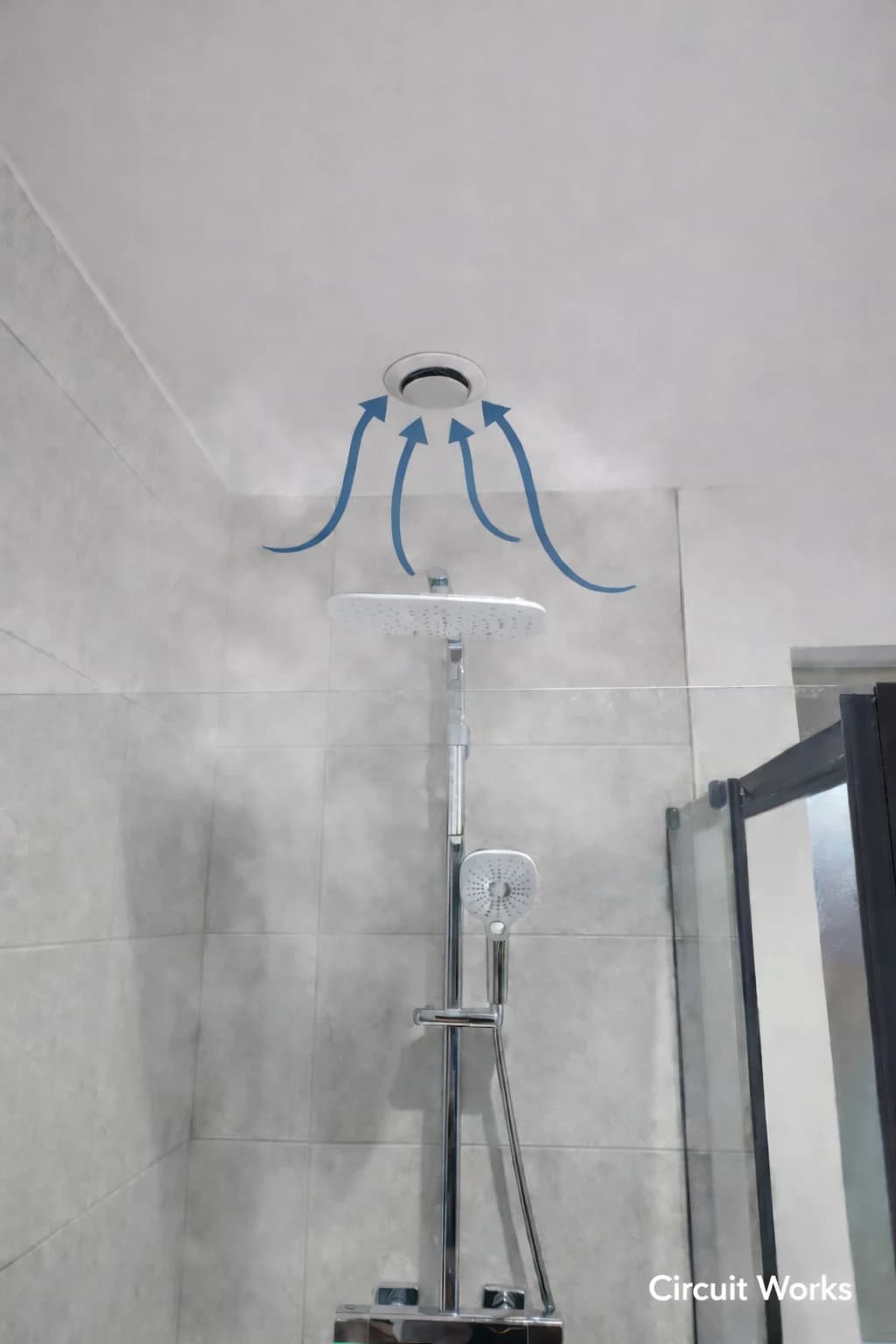
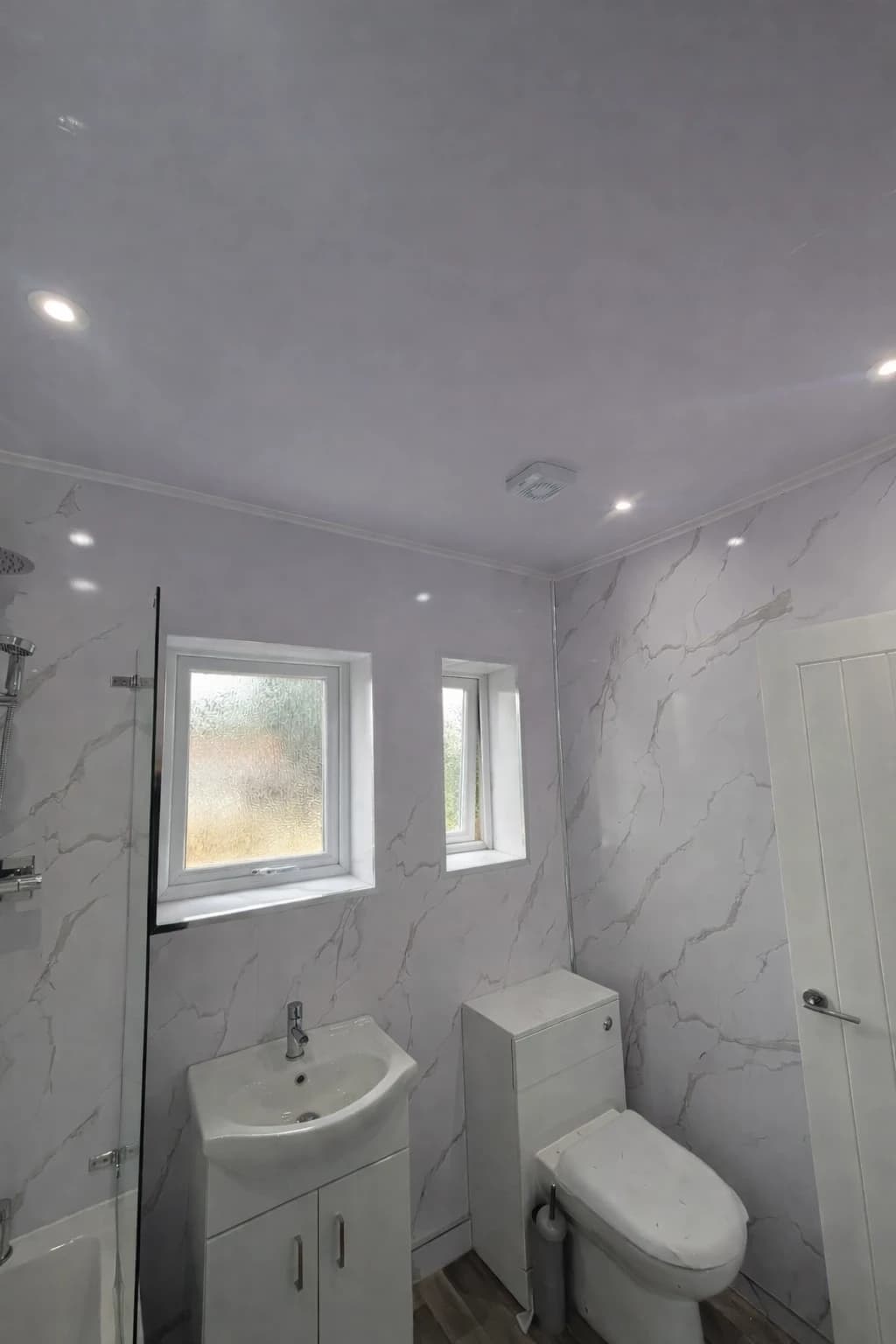
In bathrooms, downlights are often the best option because they can be IP rated for use in moisture-heavy environments. A flush fitting also means no exposed metalwork at risk of condensation.
Beyond the practical benefits, downlights create even, ambient light without dominating the ceiling. They let architectural features, wall colours, and furniture do the talking.
Where Downlights Work Best
A Word on Living Rooms and Bedrooms
This is where personal experience matters. Downlights can work in living rooms and bedrooms, but they need to be chosen carefully. A standard downlight pointing straight down from directly above your seating position can be genuinely dazzling - especially when you are lying on the sofa or in bed looking up at the ceiling.
The light from a conventional downlight is directional and concentrated. Sitting or lying directly beneath one is uncomfortable, and it creates a harsh, clinical atmosphere rather than the warm, relaxed feel most people want in a living space.
If you do want downlights in a living room or bedroom, there are ways to make them work:
Types of Downlights
How Many Downlights Do You Need?
A common mistake is installing too many downlights, which creates an over-lit, commercial feel. As a rough guide:
- Kitchens: One downlight per 1.0-1.5 square metres
- Bathrooms: One downlight per 1.5-2.0 square metres
- Hallways: Spaced 1.0-1.5 metres apart along the length
- Living rooms (if used): One per 2.0-2.5 square metres, supplemented with other lighting
These are starting points - the exact number depends on the room layout, ceiling height, and the lumen output of the fittings you choose.
Installation
Downlight installation involves cutting holes in the ceiling, running new cables, and connecting to a lighting circuit. In most cases, additional fire hoods or intumescent covers are needed above the fitting in the ceiling void.
This is not a DIY job. Incorrect installation can compromise fire safety, and any new lighting circuit is notifiable work under Part P of the Building Regulations. A registered electrician will ensure the installation meets BS 7671, is correctly fire-rated, and is fully certified.
Get a Free Quote
If you are considering downlights for your home, get in touch for a free, no-obligation quote. We can advise on the best fittings for each room, spacing, dimming options, and provide a fixed price for supply and installation. See our sockets, switches and lighting services for more detail.
Ready to get started?
Get your free instant quote in under 2 minutes, or get in touch to discuss your requirements.